End-to-end packaging solutions have become essential for global brands seeking efficiency, consistency, and speed-to-market. Instead of managing multiple vendors for design, prototyping, production, and logistics, brands increasingly rely on a single partner to handle the entire packaging manufacturing process—from concept to mass production.
What Are End-to-End Packaging Solutions?
End-to-end packaging solutions cover every stage of packaging development and execution:
- Concept development and feasibility analysis
- Structural and graphic design
- Material selection and sourcing
- Prototyping and sampling
- Mass production and quality control
- Export packaging and global logistics
Strategic Advantage: A unified workflow reduces errors, shortens lead times, and ensures brand consistency.
Stage 1: Concept & Packaging Strategy
The packaging manufacturing process begins with a clear strategy. At this stage, brands define:
- Product positioning and target market
- Functional and protective requirements
- Brand identity and visual direction
- Budget, MOQ, and scalability goals
This foundation ensures the packaging solution aligns with both brand and operational objectives.
Stage 2: Structural & Graphic Design
Design is where creativity meets engineering:
- Structural CAD designs for fit, strength, and efficiency
- Graphic layouts optimized for printing accuracy
- Material and finish selection
- Compliance with retail and shipping standards
Design Insight: Well-engineered packaging reduces material waste and improves production efficiency.
Stage 3: Prototyping & Sampling
Before mass production, prototypes validate both form and function:
- White samples for structural testing
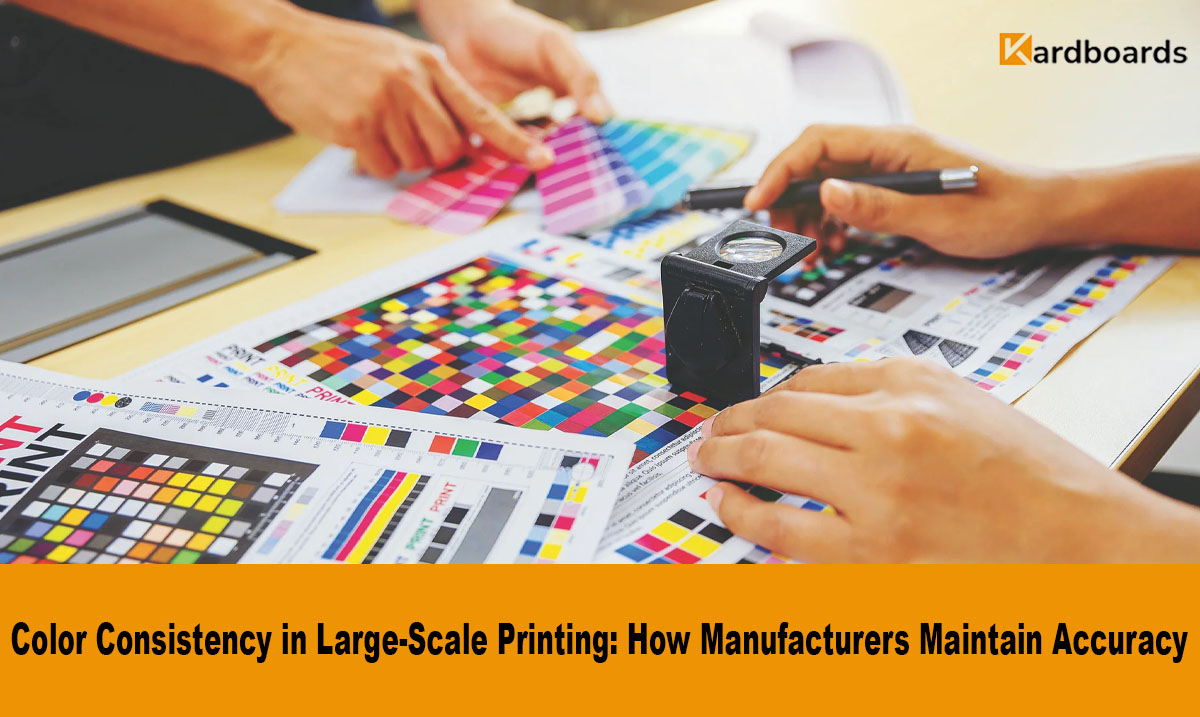
- Printed samples for color and finish approval
- Fit testing with actual products
- Drop and compression testing if required
This step minimizes costly revisions during large-scale manufacturing.
Stage 4: Pre-Production Planning
Once samples are approved, manufacturers prepare for mass production:
- Final tooling and die creation
- Material procurement and batching
- Production scheduling and line setup
- Quality benchmarks and inspection plans
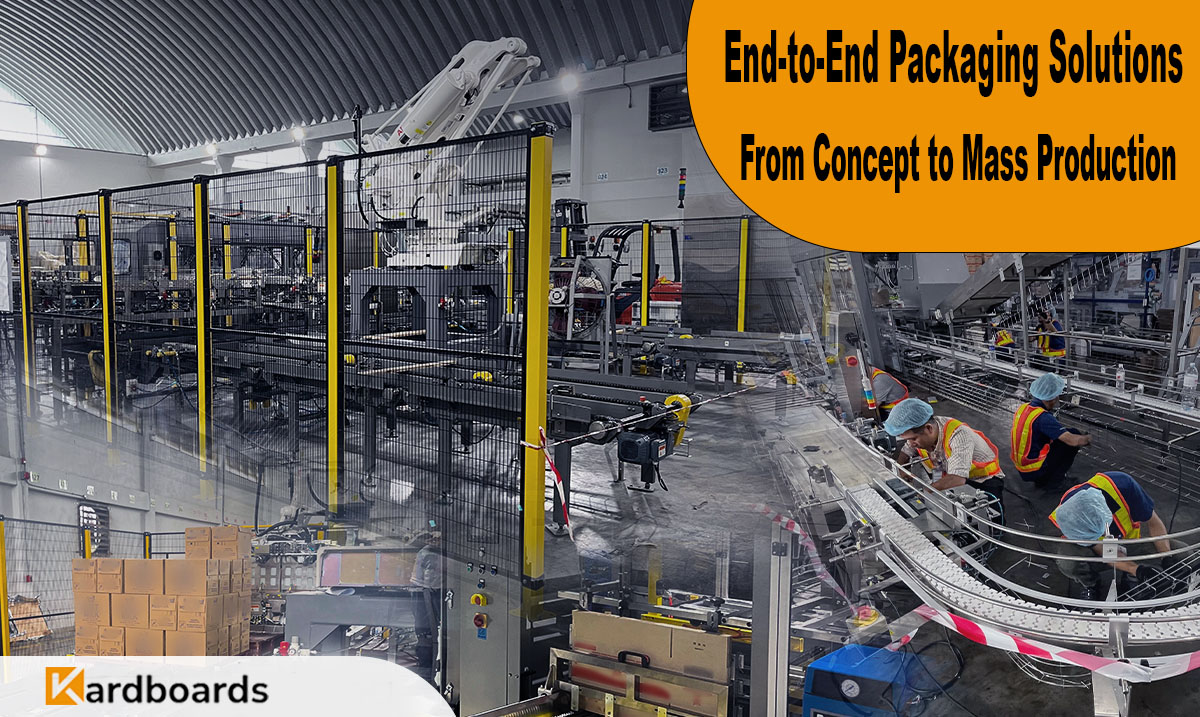
Stage 5: Mass Production
This is the core of the packaging manufacturing process. Professional facilities ensure:
- Consistent color and print quality
- Precise cutting, folding, and assembly
- In-line and post-production quality checks
- Scalable output for global demand
Quality Focus: Mass production should replicate approved samples with minimal variation.
Stage 6: Quality Control & Compliance
End-to-end packaging solutions include strict quality assurance:
- Material and print inspections
- Dimensional and structural testing
- Compliance with US and EU regulations
- Final random inspections before shipment
Stage 7: Packaging, Logistics & Global Delivery
The final stage ensures packaging arrives safely and on time:
- Export-ready packing and palletization
- Freight coordination and documentation
- Port handling and customs compliance
- Delivery to warehouses or fulfillment centers
Why Brands Choose End-to-End Packaging Partners
Global brands benefit from end-to-end packaging solutions because they offer:
- Single-point accountability
- Faster time-to-market
- Lower total project risk
- Consistent quality across regions
How Kardboards Delivers End-to-End Packaging Solutions
Kardboards supports brands throughout the entire packaging manufacturing process by providing:
- Integrated design, engineering, and production teams
- Flexible MOQs and scalable manufacturing
- Export-ready quality and compliance
- Transparent communication from concept to delivery
Frequently Asked Questions
What are end-to-end packaging solutions?
They cover the full packaging journey—from concept and design to mass production and delivery.
Why is an end-to-end approach better?
It reduces coordination issues, shortens timelines, and ensures consistent quality.
Do end-to-end solutions cost more?
Not necessarily. They often reduce total costs by minimizing errors and delays.
Can startups use end-to-end packaging services?
Yes, many providers offer scalable solutions suitable for growing brands.
How long does the full packaging process take?
Timelines vary but typically range from a few weeks to several months, depending on complexity.