In premium packaging and commercial printing, visual clarity is non-negotiable. High-resolution printing determines how sharp images appear, how clean text looks, and how accurately a brand is represented. Understanding concepts like DPI printing quality, LPI, and print sharpness helps brands make informed production decisions.
What Is High-Resolution Printing?
High-resolution printing refers to the ability of a printing process to reproduce fine details, smooth gradients, and crisp edges. Higher resolution generally results in better image clarity, especially for detailed graphics, typography, and luxury packaging finishes.
Key Insight: High resolution is not just about bigger numbers—it’s about how multiple printing variables work together.
Understanding DPI: Dots Per Inch
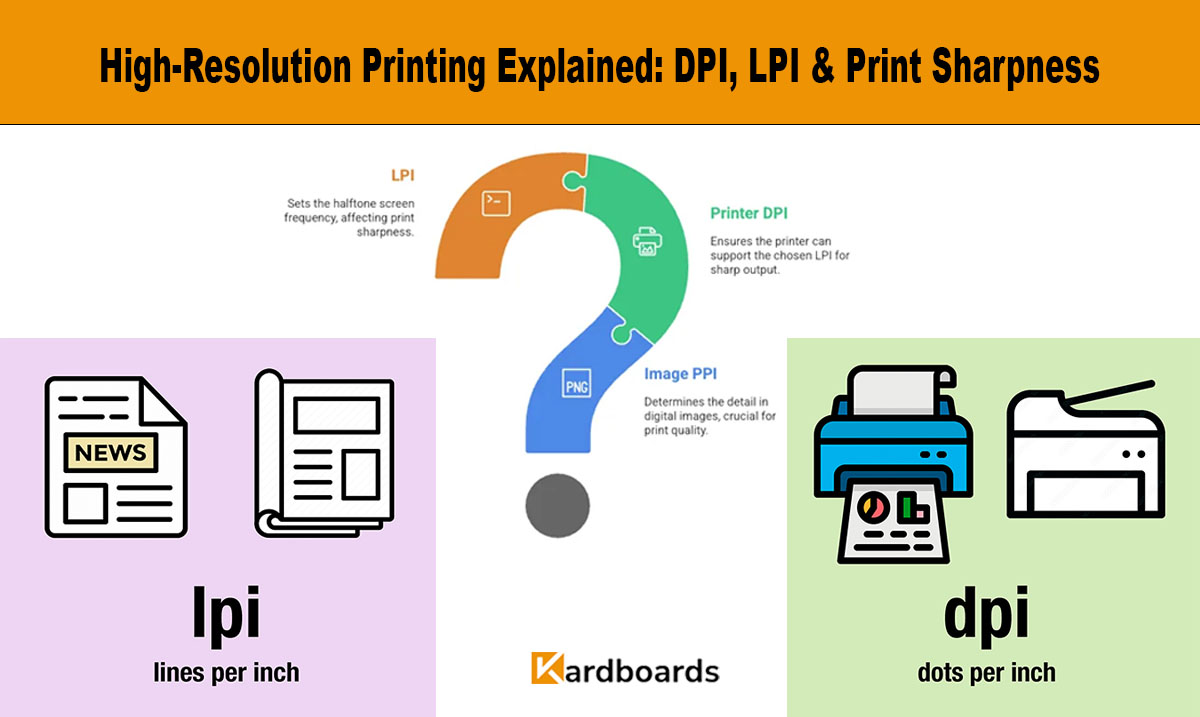
DPI (Dots Per Inch) measures how many individual dots of ink are placed within one inch of a printed image. DPI directly affects image clarity and edge sharpness.
How DPI Affects Printing Quality
- Low DPI results in visible pixelation and blurred edges
- Higher DPI produces smoother images and sharper text
- Most commercial packaging uses 300 DPI artwork
For premium packaging, artwork below 300 DPI often leads to noticeable quality degradation.
What Is LPI: Lines Per Inch?
LPI (Lines Per Inch) refers to the halftone screen frequency used in offset printing. It defines how fine the halftone dot pattern is when images are reproduced using CMYK printing.
LPI and Image Detail
- Higher LPI produces smoother tonal transitions
- Standard commercial printing uses 150–175 LPI
- Premium packaging may use up to 200 LPI
Professional Tip: A general rule is to set image DPI at 2× the LPI value for optimal results.
DPI vs LPI: Why Both Matter
DPI and LPI work together. High DPI images printed with low LPI screens will not achieve full sharpness, while high LPI printing cannot compensate for low-resolution artwork.
- DPI controls digital image detail
- LPI controls print screen refinement
- Both must be optimized for premium results
Other Factors Affecting Print Sharpness
Print sharpness is influenced by more than just DPI and LPI.
- Paper type and coating
- Ink absorption and spread
- Printing method (offset vs digital)
- Press calibration and maintenance
- File preparation and color profiles
High-Resolution Printing in Packaging
In packaging, print sharpness directly impacts perceived product value. Luxury boxes, cosmetics packaging, and electronics packaging demand precise printing to maintain brand credibility.
Brand Impact: Sharp printing enhances trust, professionalism, and shelf appeal.
How Kardboards Ensures Print Sharpness
Kardboards integrates high-resolution standards across its printing workflow:
- Artwork verification at 300 DPI or higher
- High-LPI offset printing for premium packaging
- Advanced color management systems
- Strict press calibration and quality checks
Frequently Asked Questions
Is higher DPI always better?
Not always. DPI must match the printing method and LPI to deliver real benefits.
What DPI is best for packaging printing?
300 DPI is the industry standard for high-quality packaging artwork.
What LPI is used for premium packaging?
Premium packaging often uses 175–200 LPI for smoother images.
Does digital printing use LPI?
Digital printing does not use traditional LPI but has equivalent resolution metrics.
Can low-resolution artwork be fixed during printing?
No. Low-resolution files cannot be corrected at the printing stage.