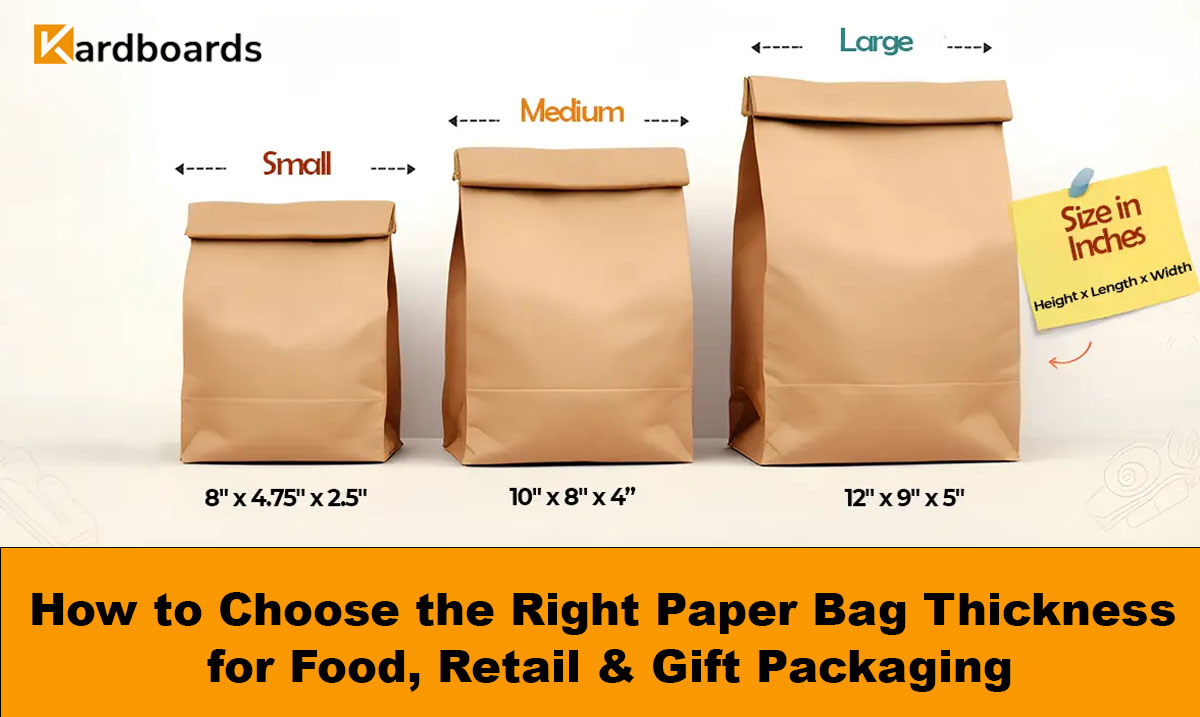
Paper bag thickness is a key decision when designing packaging — it affects durability, shelf appearance, printing quality and recyclability. This guide explains common thickness measures (GSM, ply, board weight), recommended ranges for food, retail and gifts, plus selection tips and testing standards.
Understanding Thickness: GSM, Ply and Board Weight
Before choosing, know the terminology:
- GSM (Grams per Square Metre): The most common metric for paper weight. Higher GSM = thicker, stronger paper.
- Ply: Refers to layers — 2-ply or 3-ply laminated bags add strength without extreme GSM.
- Board weight (paperboard): Measured in gsm or microns for carton-style bags and rigid bases.
Recommended Thickness Ranges By Use-Case
Use these practical ranges as starting points — final choice depends on product weight, handle type and desired feel.
Food Packaging (Takeaway, Bakery, Produce)
- Light food (bread, pastries): 70–120 GSM kraft — economical, printable, compostable options available.
- Heavier food (hot meals, multi-item orders): 120–180 GSM (or 2-ply combined) with grease/heat-resistant linings where needed.
- Wet or oily foods: Use greaseproof or PE-lined papers even if GSM is lower — lining choice can be more important than raw GSM.
Retail Packaging (Apparel, Electronics Accessories)
- Light retail (accessories): 120–160 GSM for a premium feel with good print results.
- Apparel & mid-weight items: 160–220 GSM or paperboard bases for structure and reusability.
- Heavy items or reusable bags: 250–350 GSM paper or laminated multi-ply constructions for durability.
Gift Packaging (Luxury, Boutique)
- Luxury gift bags: 200–300 GSM smooth/matte papers or coated boards for crisp edges and high-precision printing.
- High-end rigid or structured bags: 300–450 GSM paperboard with reinforcements and fabric handles for premium unboxing.
Material & Finish Considerations
Thickness is only part of the story — finish, coating and handle design change performance:
- Kraft vs Coated Paper: Kraft is strong and eco-friendly; coated papers (silk/matte) improve print vibrancy at similar GSM.
- Laminations & Linings: PE/PLA linings add moisture resistance; soft-touch laminates add luxury feel but affect recyclability.
- Handles & Reinforcement: Cotton rope, flat die-cut or reinforced twisted paper handles require higher GSM or taped reinforcements on the bag top.
Strength Tests & Quality Checks
Before finalizing, validate with standardized tests and real-world trials:
- Burst strength (Mullen test): Measures resistance to rupture — important for food with heavy or liquid items.
- Tensile & tear tests: Ensures handles and folded edges won’t fail during use.
- Compression & stacking tests: For retail and storage scenarios to avoid crushing or deforming.
- Print & finishing mock-ups: Always approve printed samples to confirm color, registration and tactile finish at chosen GSM.
Sustainability & Recyclability Tradeoffs
Thicker or laminated bags may feel premium but can be harder to recycle. Balance brand expectations with environmental goals:
- Mono-material designs: Preferable — kraft paper uncoated is widely recyclable and compostable.
- Avoid mixed laminates where possible: Plastic films or metallic layers reduce recyclability unless clearly separated in recycling streams.
- Consider recycled content: Recycled kraft at slightly higher GSM often meets strength needs and improves sustainability messaging.
Cost, MOQ & Supply Chain Tips
- Higher GSM = higher cost: Evaluate whether structural reinforcements or multi-ply builds are more economical than increasing GSM dramatically.
- Negotiate MOQs: Bulk runs lower per-unit cost; short-run digital printing helps test prototypes before committing to high-MOQ offset runs.
- Local finishing: Import plain bags and add local printing/handles to reduce freight and storage of heavy units.
Quick Selection Checklist: 1) Define product weight & use; 2) Choose GSM/ply by category (food, retail, gift); 3) Select lining/finish; 4) Test burst & handle strength; 5) Verify recyclability and cost.
Frequently Asked Questions
What GSM is best for bakery takeaway bags?
70–120 GSM unlined kraft works for dry baked goods; use greaseproof or PE-lined papers for oily or moist items.
Can I use high-GSM paper and still be eco-friendly?
Yes — choose recycled content and mono-material constructions (no plastic lamination) to keep the bag strong and recyclable.
How do I ensure handles won’t tear off?
Reinforce the top with glued or stitched tape, use taped handle reinforcements, and validate with tensile tests at expected loads.
Is thicker always better for retail bags?
Not necessarily — a well-designed 160–220 GSM bag with structural reinforcements often outperforms a heavier but poorly constructed bag.
Should I prioritize GSM or lining for wet food?
Prioritize an appropriate lining (greaseproof or PE/PLA) — lining choice is often more critical than raw GSM for wet or oily foods.