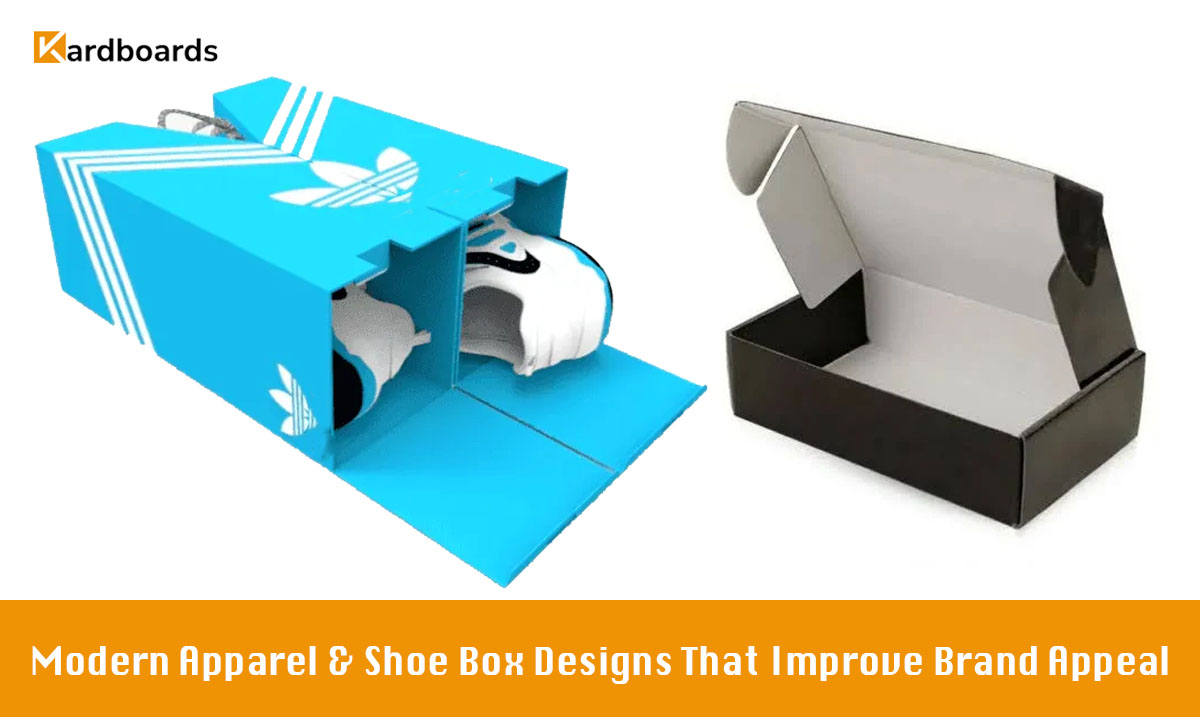
In the fashion and footwear industry, packaging is a powerful extension of brand identity. Modern apparel and shoe box designs do more than protect products — they communicate style, quality, and values, influencing how customers perceive the brand from the very first interaction.
Why packaging matters in fashion and footwear
Apparel and shoes are emotional purchases driven by aesthetics and lifestyle. Packaging plays a decisive role:
- Creates a strong first impression
- Enhances perceived product quality
- Improves shelf presence and online unboxing
- Strengthens brand recognition and loyalty
Modern trends in apparel box design
Contemporary apparel packaging focuses on simplicity, efficiency, and brand alignment:
- Minimalist box structures with clean lines
- Drawer-style and magnetic closure boxes
- Monochrome palettes with bold logos
- Flat-pack designs for cost-efficient shipping
Shoe box designs that balance durability and style
Shoe boxes must handle weight and transport stress while maintaining visual appeal:
- Reinforced corrugated or rigid board structures
- Ventilation holes to maintain freshness
- Lift-off lids or slide-out drawer formats
- Stackable designs for retail and warehousing
Design insight: A well-designed shoe box protects the product while doubling as a reusable storage solution.
Material choices for modern fashion packaging
Material selection influences sustainability, cost, and brand perception:
- Rigid cardboard: Ideal for premium apparel and luxury footwear.
- Corrugated board: Durable and suitable for mass-market shoes.
- Kraft paperboard: Popular for eco-conscious fashion brands.
- Recycled paper materials: Support sustainability goals.
Branding elements that elevate apparel and shoe boxes
Modern packaging integrates branding subtly yet effectively:
- Embossed, debossed, or foil-stamped logos
- Signature brand colors and textures
- Printed interiors for storytelling
- Consistent typography across collections
Branding tip: Consistency across all packaging touchpoints builds instant brand recognition.
The role of unboxing in customer experience
Unboxing has become a key part of fashion marketing:
- Neatly folded apparel presentation
- Tissue paper, inserts, and thank-you cards
- Layered reveals for premium collections
- Social-media-friendly packaging aesthetics
Retail vs e-commerce packaging considerations
Packaging strategies differ depending on sales channels:
- Retail packaging: Focus on shelf impact and visual branding.
- E-commerce packaging: Prioritize protection and lightweight design.
- Hybrid solutions: Combine display appeal with shipping durability.
Sustainability in modern apparel and shoe packaging
Eco-conscious packaging is increasingly important for fashion brands:
- Plastic-free apparel and shoe boxes
- Recyclable and biodegradable materials
- Water-based inks and coatings
- Reusable packaging designs for long-term use
Why fashion brands choose Kardboards
- Custom-engineered box structures for apparel and footwear.
- Wide material and finish options to match brand positioning.
- Scalable solutions for startups and global brands.
- Export-ready quality for international fashion markets.
Frequently Asked Questions
What materials are best for shoe boxes?
Corrugated board and rigid cardboard are the most commonly used materials for durability and strength.
Can apparel packaging be customized for branding?
Yes. Apparel boxes can be fully customized in size, structure, printing, and finishes.
Is sustainable packaging suitable for fashion brands?
Absolutely. Many fashion brands adopt recyclable and plastic-free packaging solutions.
Do modern box designs improve customer experience?
Yes. Thoughtfully designed packaging enhances unboxing satisfaction and brand perception.
Can packaging support both retail and e-commerce?
Yes. Hybrid packaging designs balance visual appeal with shipping protection.