Selecting the right packaging materials is one of the most critical decisions in product presentation and protection. The material not only affects cost and durability but also communicates brand quality and positioning.
From lightweight paperboard to premium rigid box packaging and durable MDF boxes, each material serves a specific purpose across retail, e-commerce, and luxury markets.
Paperboard Packaging
Paperboard is among the most widely used packaging materials due to its versatility, affordability, and sustainability.
- Lightweight and easy to print
- Ideal for folding cartons and retail packaging
- Compatible with high-quality offset printing
- Recyclable and eco-friendly
Paperboard works best for products that require visual appeal with moderate protection.
Corrugated Packaging
Corrugated board adds structural strength through fluted layers, making it suitable for shipping and e-commerce.
- Excellent impact resistance
- Customizable flute thickness for strength
- Cost-effective for bulk transportation
- Supports both plain and printed designs
Rigid Box Packaging
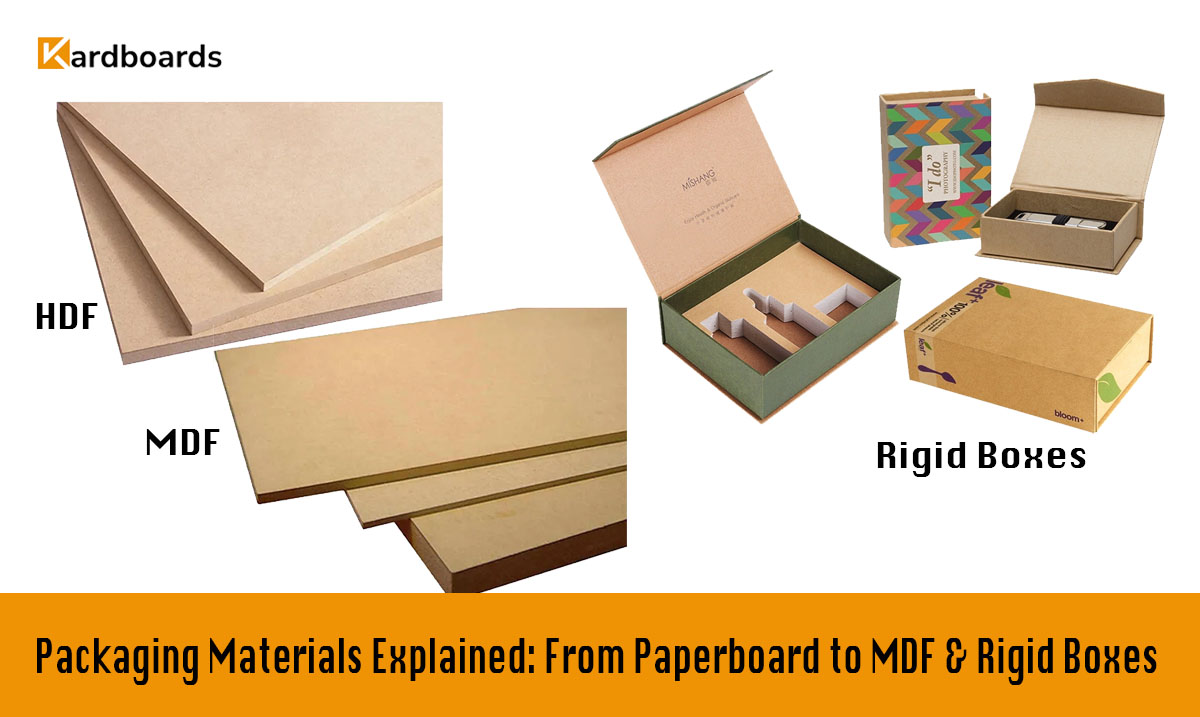
Rigid box packaging is synonymous with premium and luxury presentation. Constructed from thick paperboard wrapped with specialty papers, rigid boxes offer unmatched durability and aesthetics.
- Superior structural strength
- High-end finishes such as foil stamping and embossing
- Magnetic closures and custom inserts
- Luxury unboxing experience
Premium Appeal: Rigid boxes significantly increase perceived product value in luxury retail and gifting.
MDF Boxes
MDF boxes are used for ultra-premium packaging where longevity and durability are essential. Made from engineered wood fibers, MDF offers a solid, furniture-like feel.
- Exceptional strength and rigidity
- Ideal for luxury gift boxes and collectibles
- Supports lacquer finishes and wood veneers
- Reusable and long-lasting
MDF packaging is often chosen for high-value products where the box itself becomes part of the product experience.
Choosing the Right Packaging Material
The ideal material depends on product weight, brand positioning, budget, and logistics requirements.
- Paperboard: Best for cost-effective retail packaging
- Corrugated: Best for shipping and protection
- Rigid boxes: Best for premium brand presentation
- MDF boxes: Best for luxury and long-term use
Design Strategy: Many brands combine materials to balance protection, cost, and aesthetics.
Why Material Choice Impacts Brand Perception
Consumers associate packaging weight, texture, and construction with product quality. The right material elevates brand credibility and customer satisfaction.
Premium materials also enhance durability, reduce damage rates, and support a more memorable unboxing experience.
Frequently Asked Questions
What is the most sustainable packaging material?
Paperboard and corrugated packaging are among the most sustainable options due to recyclability and renewable sourcing.
Are rigid boxes recyclable?
Yes. Rigid boxes made from paperboard are recyclable, especially when designed with eco-friendly wraps and adhesives.
When should MDF boxes be used?
MDF boxes are ideal for high-value products, luxury gifting, and reusable packaging where durability is critical.
Is rigid packaging suitable for e-commerce?
Yes. Rigid packaging provides excellent protection and premium presentation when engineered for shipping.
Can different packaging materials be combined?
Absolutely. Hybrid designs often combine corrugated, rigid board, and paperboard for optimized performance.