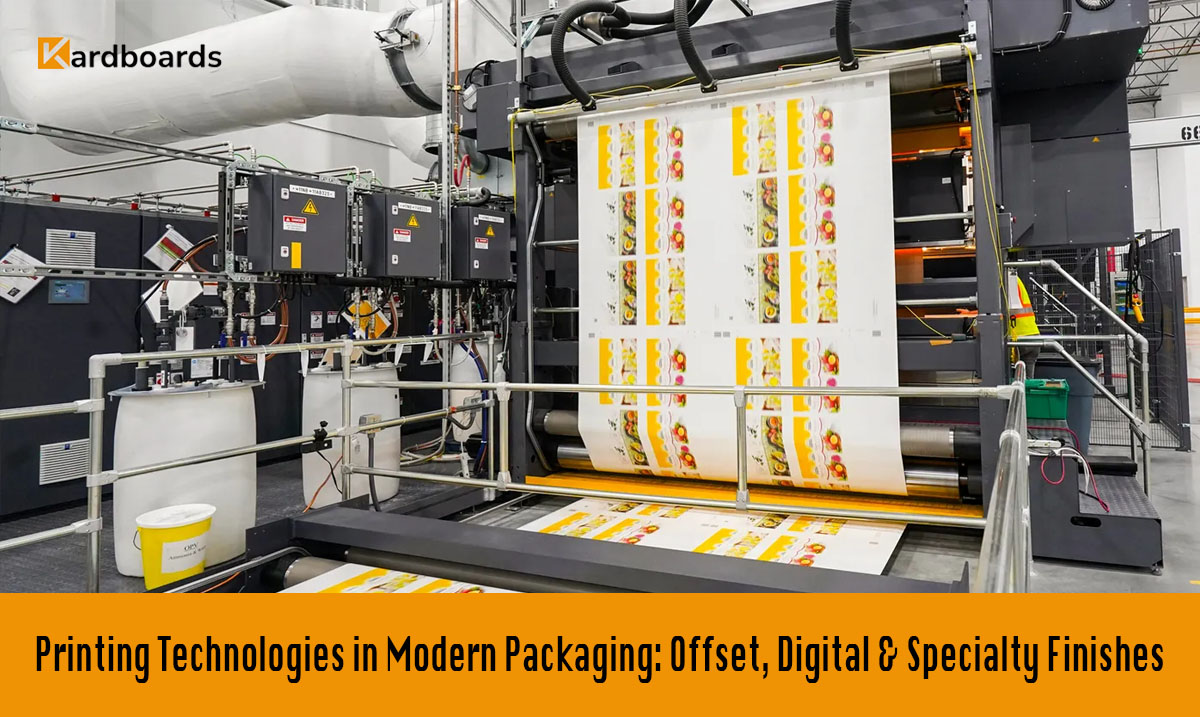
Packaging is no longer just structural — it is visual communication. Modern packaging printing technologies allow brands to achieve exceptional color accuracy, detail, and finishing effects that influence consumer perception.
Understanding the differences between offset printing, digital printing packaging, and specialty finishes helps brands choose the right solution for quality, scale, and budget.
Offset Printing in Packaging
Offset printing remains the industry standard for high-volume, premium packaging due to its consistency and superior color reproduction.
- Excellent color accuracy and smooth gradients
- Cost-effective for large production runs
- Supports specialty inks and coatings
- Ideal for rigid boxes, folding cartons, and luxury packaging
Best Use Case: Offset printing is ideal for brands that require consistent quality across large quantities.
Digital Printing for Packaging
Digital printing packaging has revolutionized short-run and customized production. It eliminates printing plates, enabling faster turnaround and personalization.
- No plate setup costs
- Fast prototyping and short-run production
- Variable data printing for personalization
- Ideal for limited editions and market testing
Digital printing is especially valuable for e-commerce brands, seasonal campaigns, and customized packaging solutions.
Flexographic Printing
Flexographic printing is commonly used for corrugated and high-volume transport packaging.
- Efficient for large-scale production
- Suitable for simple graphics and branding
- Cost-effective for shipping cartons
Specialty Printing Finishes
Specialty finishes elevate packaging from functional to premium by adding tactile and visual depth.
- Foil Stamping: Metallic accents for luxury appeal
- Embossing & Debossing: Raised or recessed textures
- Spot UV: Gloss highlights on matte surfaces
- Soft-Touch Lamination: Velvet-like tactile finish
Luxury Impact: Specialty finishes significantly increase perceived value and shelf presence.
Choosing the Right Printing Technology
The right printing method depends on production volume, design complexity, and brand positioning.
- Offset printing: Best for large runs and premium quality
- Digital printing: Best for flexibility and personalization
- Flexographic printing: Best for transport and corrugated packaging
Why Printing Quality Shapes Brand Perception
Print quality influences how consumers perceive brand professionalism and product value. Crisp graphics, accurate colors, and refined finishes create trust and emotional engagement.
Investing in advanced packaging printing technologies helps brands stand out in competitive retail and e-commerce environments.
Frequently Asked Questions
What is the best printing method for packaging?
Offset printing is best for high-quality, large-volume packaging, while digital printing works well for short runs and customization.
Is digital printing suitable for luxury packaging?
Yes. Digital printing can be combined with specialty finishes to achieve premium results in smaller quantities.
What are specialty finishes in packaging?
Specialty finishes include foil stamping, embossing, spot UV, and soft-touch coatings that enhance visual and tactile appeal.
Does printing affect packaging sustainability?
Yes. Water-based inks, efficient processes, and reduced waste from digital printing support sustainable packaging goals.
Can multiple printing techniques be combined?
Absolutely. Many premium packaging projects combine offset printing with specialty finishes for maximum impact.