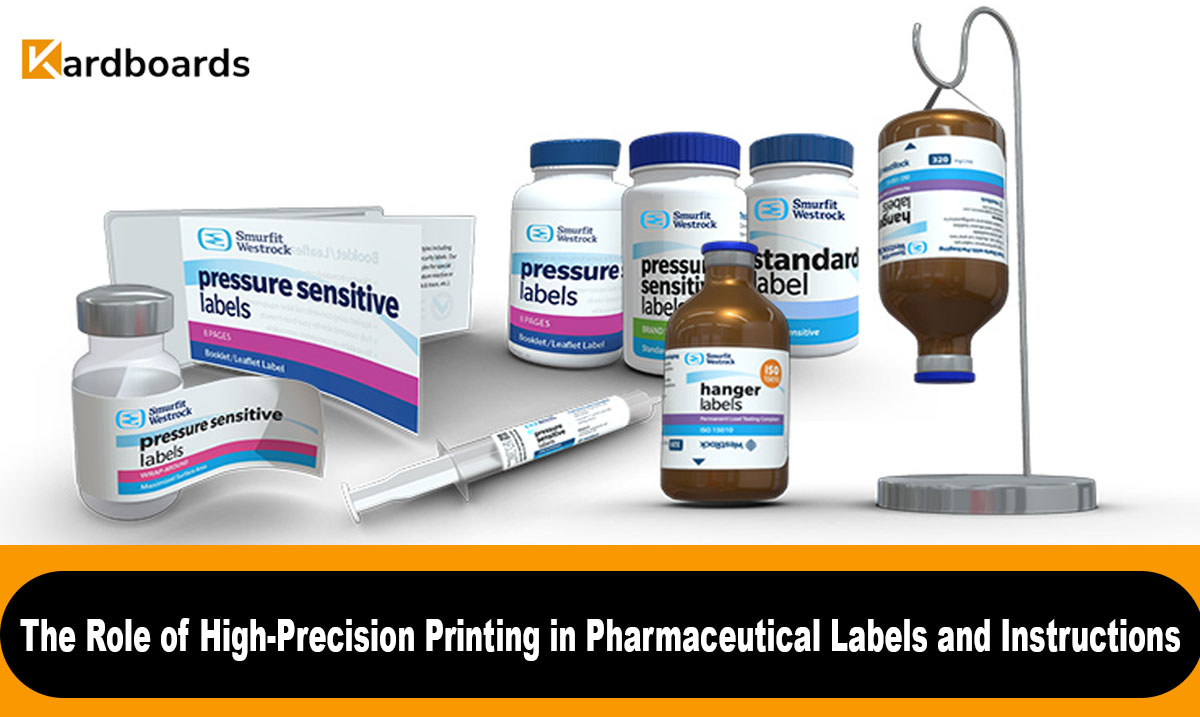
Accurate, readable and durable labels are fundamental to pharmaceutical safety. High-precision printing ensures that every label, leaflet and instruction panel meets strict regulatory, clinical and user-experience requirements — reducing medication errors, enabling traceability and preventing counterfeits.
Why High-Precision Printing Is Critical
Pharmaceutical labels carry vital information: drug name, dosage, batch, expiry, storage conditions, warnings and barcodes. High-precision printing delivers:
- Improved legibility: Crisp microtext, consistent type sizes and high contrast reduce misreading by clinicians and patients.
- Reliable barcodes & 2D codes: High-resolution prints ensure barcode scanners and vision systems read codes first time — essential for inventory, dispensing and serialization.
- Durability: Resistant inks and coatings keep information readable through handling, moisture, sunlight and chemical exposure.
Key Printing Technologies & Techniques
Manufacturers combine multiple techniques to meet pharma needs:
- Digital variable-data printing: Prints unique identifiers, batch numbers and expiration dates on-demand with zero plate cost — ideal for serialization.
- High-resolution offset & flexo: For consistent color, fine line art and long runs with exceptional print fidelity.
- Microtext & microprinting: Anti-counterfeit and legibility features that remain readable under magnification.
- Tamper-evident inks & varnishes: Coatings that reveal tampering attempts and protect printed data.
Regulatory Compliance & Traceability
Pharma printing must comply with complex regulations (FDA, EMA and regional bodies) and track-and-trace frameworks:
- Serialization readiness: High-precision print supports unique identifiers required by national traceability systems.
- Clear, consistent labeling: Language, font sizing, contrast and placement must meet local regulatory rules for patient safety.
- Audit trails: Printing processes integrated with ERP and serialization databases help prove compliance and support recalls.
Anti-Counterfeit & Authentication Features
Beyond legibility, printing provides authentication layers:
- Overprinted security codes: Invisible inks, tamper-reactive varnishes and serialized QR/2D codes that link to verification systems.
- Holographic foils and micro-images: Harder to duplicate and easy to authenticate visually or via apps.
- NFC / RFID integration: Printed labels can include encoded tags for secure, contactless verification.
Patient Instructions: Clarity Saves Lives
Leaflets and instruction panels must be easy to follow — high-precision printing ensures consistent typography, pictograms, and multilingual layouts so patients can safely use medicines:
- Consistent typography: Legible fonts and correct line spacing to avoid misinterpretation.
- Pictograms & icons: Universally understood graphics complemented by precise printing for crisp edges and recognizability.
- Multilingual printing: High-fidelity reproduction keeps translations clear across language variants.
Quality Control & Proofing
High-precision output requires rigorous quality workflows:
- Color & contrast proofing: Ensures critical warnings and dosage info meet legibility standards.
- Barcode verification: Automated read/verification during production to prevent unreadable codes entering supply chains.
- Environmental testing: Simulated aging, humidity and abrasion tests validate durability of labels and inks.
Bottom line: Investing in high-precision printing for pharmaceutical labels and instructions reduces clinical risk, strengthens regulatory compliance, and protects brands against counterfeiting — directly contributing to patient safety and supply-chain integrity.
Frequently Asked Questions
Why do pharmaceutical labels need high-precision printing?
Because labels must be perfectly legible, machine-readable (barcodes/2D codes) and durable under harsh storage and handling — all of which high-precision printing delivers.
Can serialized codes be printed reliably at high speed?
Yes — modern digital and thermal-transfer systems print variable data at production speeds while maintaining high resolution and verification through inline readers.
Are there eco-friendly options for durable pharma labels?
Yes — many compliant, recyclable or compostable substrates and water-based inks now meet barrier and durability needs while lowering environmental impact. Selection must still meet preservation requirements for specific medicines.
How does printing help fight counterfeit medicines?
Printing incorporates covert and overt security features (microprinting, holograms, serialized 2D codes, invisible inks) that are hard to replicate and easy to verify by regulators, pharmacies and consumers.
Does Kardboards provide end-to-end pharma label printing?
Yes — Kardboards offers compliant printing, serialization, verification, material testing, and integration with traceability systems to support pharmaceutical manufacturers and distributors.