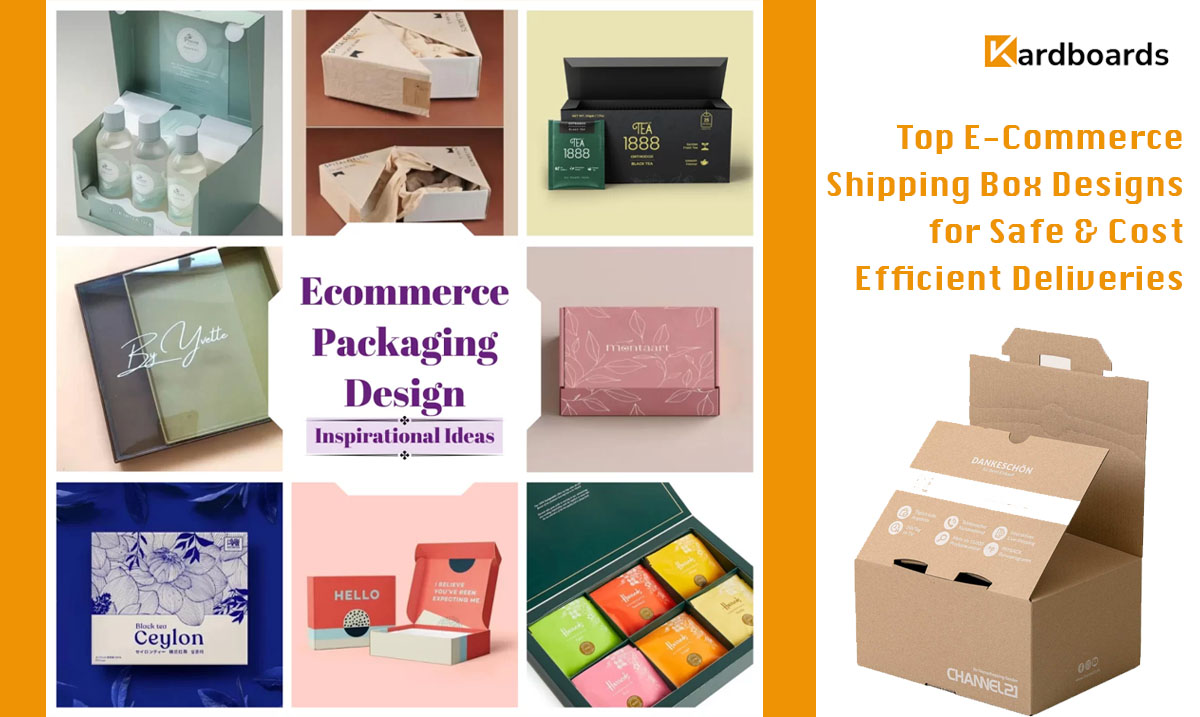
E-commerce shipping boxes do more than protect products — they influence fulfillment efficiency, dimensional weight costs, sustainability performance and the unboxing experience. Choosing the right box design is a strategic decision that balances protection, cost, supply chain constraints and brand requirements. This guide outlines proven box designs, cushioning strategies, material choices, and operational tips to optimize for safe and cost-efficient deliveries.
Key principles for shipping box design
Before picking a design, use these guiding principles:
- Right-size: Minimise empty space to reduce dimensional weight charges and movement inside the box.
- Protect: Match protective solutions (cushioning, inserts) to product fragility and drop risk.
- Stack & ship: Ensure boxes are strong for stacking and resistance to compression during transit.
- Sustainable choice: Use the least material necessary and prefer recyclable or recycled-content materials.
- Operational fit: Consider packing speed, automation compatibility, and storage footprint.
Quick tip: Measure finished product size (including any protective wrap) and design the box to match within 10–20mm margin to cut costs and movement.
Top box designs for e-commerce
Here are the most widely adopted and effective box constructions for online retail:
- Regular Slotted Container (RSC): The workhorse — four flaps on top and bottom, cost-effective and easy to produce; ideal for bulk and varied SKUs.
- Full Overlap Slotted Container (FOL): Overlapping flaps increase stacking strength — useful for heavier shipments and pallets.
- Die-cut mailer boxes (auto-lock): Single-piece crash-lock or auto-lock bottom boxes that fold quickly, reducing pack time; great for subscription boxes and small electronics.
- One-piece folder (OPF): Wraps the product snugly with integrated flaps — good for books, framed prints, and flat goods.
- Corrugated mailers (wrap-around): Lightweight, form-fitting mailers that reduce voids and are excellent for clothing and soft goods.
- Partitions & multi-compartment boxes: Internal dividers protect multiple items in one shipment — common for cosmetics, glassware, and electronics accessories.
- Box-in-box / return-friendly designs: Outer shipper with an inner retail box that doubles as a return box — simplifies reverse logistics and reduces material.
Protective systems: cushioning & internal supports
Protection strategies must be right-sized to the product and its damage risk:
- Molded pulp inserts: Low-cost, recyclable inserts that fit product contours — excellent for fragile electronics and glass.
- Die-cut cardboard inserts & partitions: Lightweight, recyclable and excellent for separating parts and controlling movement.
- Inflatable air cushions & void fill: Minimise weight while maintaining shock absorption for lighter fragile goods.
- Corrugated pads & edge protectors: Add stacking strength and protect corners from impact.
- Foam-in-place / PE foam: High protection for high-value items — balance protection with recyclability concerns.
Design rule: Aim for maximum product immobilization — that reduces peak deceleration forces during drops and prevents internal abrasion.
Material choices & performance
Corrugated board is the default for e-commerce, but the flute profile and board grade matter:
- Single-wall corrugated (B/C/E flutes): Common for lightweight to medium loads — choose flute for cushioning vs compression needs (E for thin, B/C for strength).
- Double-wall corrugated: Needed for heavy or high-stack shipments to resist crushing.
- Kraft liners & recycled content: Using high recycled-content liners reduces embodied carbon while maintaining adequate strength for many uses.
- Water-resistant coatings: For humid environments use moisture-resistant boards or light water-based coatings that don't ruin recyclability.
Right-sizing & automation
Reducing dimensional weight fees and material waste depends heavily on right-sizing strategies:
- On-demand box-making: Machines that cut and form boxes to product dimensions reduce voids and packing material volumes.
- Pre-sized SKU-based packs: Standardise on a set of optimized box sizes for your SKU portfolio to simplify operations and minimize overpack.
- Paper void fill & wrap optimization: Intelligent fill that adapts to box size is cheaper than fixed bulk fill in many cases.
Operational tip: A 10–20% reduction in average package volume can significantly lower shipping costs under dimensional weight pricing models.
Branding, unboxing & customer experience
Even functional shipping boxes can support branding and customer delight:
- Exterior branding: Minimal logos, tracking QR codes and handling instructions can be printed using eco-friendly inks.
- Interior messaging: Use inner prints, tissue paper, or stickers to surprise customers without heavy finishing costs.
- Presentation vs. protection: For high-value items, combine a retail-grade inner box with a protective outer shipper. The inner box handles brand presentation.
Testing, compliance & durability verification
Validating designs through testing prevents costly returns and damages:
- Drop testing: Simulate transit impacts at product-specific heights to verify protective systems.
- Compression testing: Ensure box strength for stacking during warehousing and pallet transit.
- Vibration testing: Assess risk of abrasion and component loosening during long transport.
- Transport simulation: Combine multiple tests to replicate likely transit scenarios for your route network.
Quality control tip: Include periodic sample testing from production runs to detect material or conversion drift early.
Sustainability: materials & circularity
Balancing protection and sustainability is vital for modern e-commerce brands:
- Use recycled corrugated where possible: Balances strength with lower embodied carbon.
- Design for recyclability: Avoid mixed-material tapes, plastic windows and incompatible liners unless necessary.
- Lightweight engineering: Reduce board grade only where testing shows acceptable protection to save material.
- Return & reuse programs: Consider multi-trip outer shippers for subscription or B2B models where reverse logistics make sense.
Cost optimization & procurement best practices
Smart sourcing drives both cost-savings and reliability:
- Aggregate spend: Consolidate orders to negotiate better board grades and conversion rates.
- Standardise sizes: Reduces tooling costs and allows bulk purchasing of optimized stock sizes.
- Request TCO quotes: Ask suppliers for true total cost of ownership, including material, conversion, transport and expected damage rates.
- Localised sourcing: Use regional converters to lower lead times and freight emissions where possible.
Packing checklist for shipping-ready boxes
- Verify product dimensions including protective wrap
- Select right-size box within 10–20mm clearance
- Ensure product immobilisation (inserts/void fill)
- Seal with quality tape; avoid mixed-material seals
- Label clearly with handling instructions & tracking
- Run random QC drop/compression checks
Frequently Asked Questions
What is the best box design for reducing shipping damage?
The best design immobilises the product and uses appropriate internal supports (molded pulp, die-cut inserts, partitions). For most SKUs, a right-sized RSC or die-cut mailer with tailored inserts provides the best balance of protection and cost.
How can I reduce dimensional weight charges?
Reduce empty space by right-sizing boxes, adopt on-demand box-making where feasible, and standardise a set of optimised box sizes matched to your SKU portfolio to minimise wasted volume.
Are lightweight mailers safe for fragile items?
Not usually. Lightweight mailers are best for soft goods or items with low fragility. Fragile items require structured boxes plus internal cushioning or molded supports.
Which materials are most sustainable for shipping boxes?
Corrugated board with high recycled content, recyclable void fill (paper), and water-based inks are among the most sustainable choices. Avoid mixed-material laminations that hinder recycling.
How often should I test my packaging?
Run full testing during design and any material/convertor changes. In production, perform periodic sample tests (e.g., monthly or per production lot) and after any supplier change to catch issues early.