Folding cartons are one of the most widely used packaging solutions across industries such as food, cosmetics, pharmaceuticals, electronics, and FMCG. Lightweight, customizable, and cost-efficient, they offer a perfect balance between branding potential and product protection. As global demand for sustainable and premium packaging continues to grow, folding cartons have become a top choice for brands seeking smart, scalable packaging.
What Are Folding Cartons?
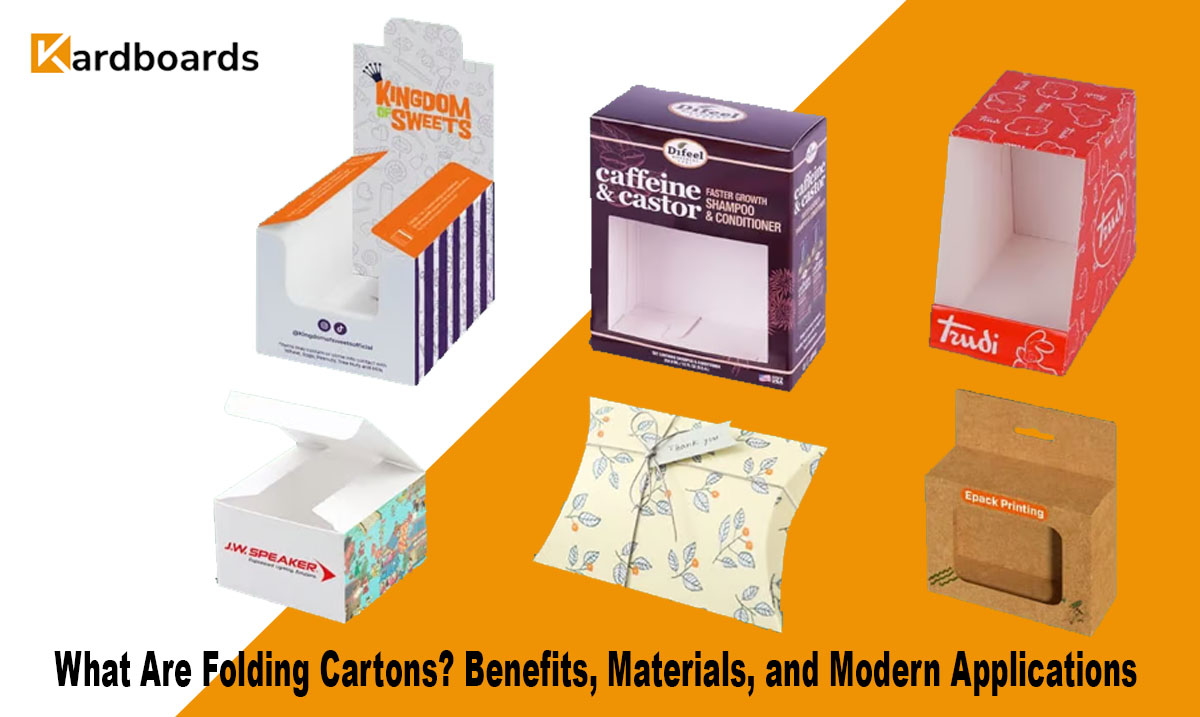
A folding carton is a paperboard box that is printed, cut, creased, folded, and glued to form a ready-to-use retail or shipping package. They are typically delivered flat to save storage space and assembled during product filling.
Key Advantage: Folding cartons offer the perfect combination of structural strength, print quality, and sustainability — ideal for retail shelves and e-commerce packaging.
Common Materials Used in Folding Cartons
Different industries require different functionality. Folding cartons can be produced using a wide range of paper-based materials:
- SBS (Solid Bleached Sulfate): Premium white paperboard for cosmetics, electronics, and pharmaceuticals.
- FBB (Folding Box Board): Lightweight and stiff; used for food and FMCG products.
- Kraft Paperboard: Eco-friendly, natural-looking board ideal for sustainable packaging.
- CCNB (Clay-Coated News Back): Cost-effective option for mass-market packaging.
- Recycled Paperboard: Sustainable, budget-friendly option for general packaging.
Types of Folding Cartons
Different structural styles are available depending on the product requirements:
- Straight Tuck End (STE): Clean, seamless appearance for beauty and wellness products.
- Reverse Tuck End (RTE): Economical and easy to assemble.
- Auto-Lock Bottom: Extra strength for heavier items.
- Crash Bottom: Ideal for packaging with manual filling.
- Window Cartons: Includes PET or PLA window to showcase product visibility.
Benefits of Folding Cartons
- Lightweight & Efficient: Reduces shipping and storage costs.
- High-Quality Printing: Supports offset, UV, foil stamping, and embossing.
- Eco-Friendly: 100% recyclable and often biodegradable.
- Cost-Effective: Ideal for mass production with fast turnaround.
- Highly Customizable: Unlimited shapes, finishes, and structures.
Modern Applications of Folding Cartons
Folding cartons are used across industries due to their versatility:
- Food & Beverages: Cereal boxes, tea packaging, bakery cartons.
- Cosmetics & Skincare: Cream boxes, serum cartons, makeup packaging.
- Pharmaceuticals: Medicine boxes, blister pack outer cartons.
- Electronics: Smartphone accessories, cables, wearable tech packaging.
- Retail & FMCG: Soaps, detergents, toys, stationery.
Why Brands Choose Kardboards for Folding Cartons
- Precision Cutting: ±0.5mm tolerance ensures perfect folding and assembly.
- Premium Printing: Vibrant colors, HD graphics, and luxury finishes.
- Sustainable Manufacturing: FSC-certified materials and water-based inks.
- Global Export Expertise: Perfect for brands across Europe, USA & Asia.
Frequently Asked Questions
What materials are best for folding cartons?
SBS and FBB are ideal for high-quality printing, while Kraft is best for eco-friendly packaging.
Are folding cartons environmentally friendly?
Yes. They are recyclable, biodegradable, and can be produced from FSC-certified materials.
Can folding cartons be customized?
Absolutely. You can customize the size, shape, printing, window, lamination, and finishes.
Which industries use folding cartons?
Food, pharmaceuticals, beauty, electronics, FMCG, and retail brands widely use folding cartons.
Are folding cartons suitable for heavy products?
Yes, especially styles like auto-lock or crash-bottom cartons which offer higher strength.